
Quick answer: How do community trail running events work? A small team and a few volunteers mark a natural-surface course, run check-in, a start, aid points and a finish, then restore the trail afterwards.
Community races sit within the wider field of outdoor running events, but they run on far fewer people and far less money than a big commercial race. Entry steps are covered separately in how to register for a trail race. This guide follows the day from the organiser and volunteer side, so a first-timer can see what is happening behind each stage.
Community and large races at a glance
The practical difference between a community event and a big race is team size and money, not the basic shape of the day. Both need a course, a start, support on the route and a finish. The table sets out what published organiser and runner guidance says, and what to do with it when choosing a race.
| Element | What the evidence shows | Planning use |
|---|---|---|
| Organising team | A very small team, sometimes almost one person, handles everything. One festival describes a core team of two organisers who recruit 4-5 helpers. | Expect a friendly but stretched crew. Be patient at check-in and follow instructions promptly. |
| Funding | Registration revenue alone does not cover costs. Sponsorship scales with event size, so a small event attracts a small sponsor. | Expect simple facilities and no big-brand expo. Entry fees are only part of what keeps a small race going. |
| Aid stations | Big races have aid stations at intervals along the route. | Read the race information to see where refreshments are offered before deciding what to carry. |
| Kit lists | Longer races publish mandatory kit lists for competitors. | Check the kit list well before race day, not at the check-in table. |
| Cut-off times | There are always cut-off times, and runners who miss them are pulled from the race. | Pick a distance whose cut-offs suit your pace. |
Figures are drawn from Runlovers’ account of organising a trail race and Runner’s Tribe’s first-competition guide.
One further difference is how success is judged. Dynafit’s overview of trail running says the experience itself takes centre stage rather than standardised times, and that terrain differs too greatly to compare any two races. A community race is therefore best judged on its setting and organisation, not on a finish time set against another event.
Who organises and staffs a small local trail race
A small local trail race is organised by a handful of people who combine planning, permissions, course work and race-day management. Runlovers describes the smallest events as run by a team that is in some cases almost a one-man band. Its own festival has two organisers, who usually manage to recruit 4-5 people to help.

Volunteers are the main source of capacity. Typical jobs include:
- Trail work: friends and volunteers make the trails passable once winter ends, before any marking can start.
- Course marking: the same people tape and sign the route and may re-check it close to race day.
- Race-day roles: helpers staff check-in, refreshment points and the finish area, as the sections below describe.
Local relationships matter as much as headcount. Runlovers says organisers also need to know the area and its inhabitants, because the race passes through land and communities that live there year-round. Clubs and associations often provide that local base, and how do running associations organise trail races explains how.

Before race day: inspecting and marking the course
Course work starts long before the start line. Runlovers says organisers begin inspecting the trails about two months before the race, then recruit helpers to clear them if winter has left them impassable. Marking follows, using tape and direction signs along the route.
Marking can fail in ways a participant never sees. In one reported case, grazing cows ate most of the marker bands, so the course had to be re-tracked the night before the race. The lesson for runners is practical. Even in a well-run event the route may have been remarked at short notice, so the briefing is worth hearing in full.
Race day in order
Arrival and check-in
Volunteers set up a registration point, hand out numbers and confirm that each entrant is ready to start. Check-in is also where kit rules bite: Runner’s Tribe notes that runners without the required kit can be refused entry to the race. Arriving with the full kit list already packed removes the most avoidable problem of the day.
Briefing and start
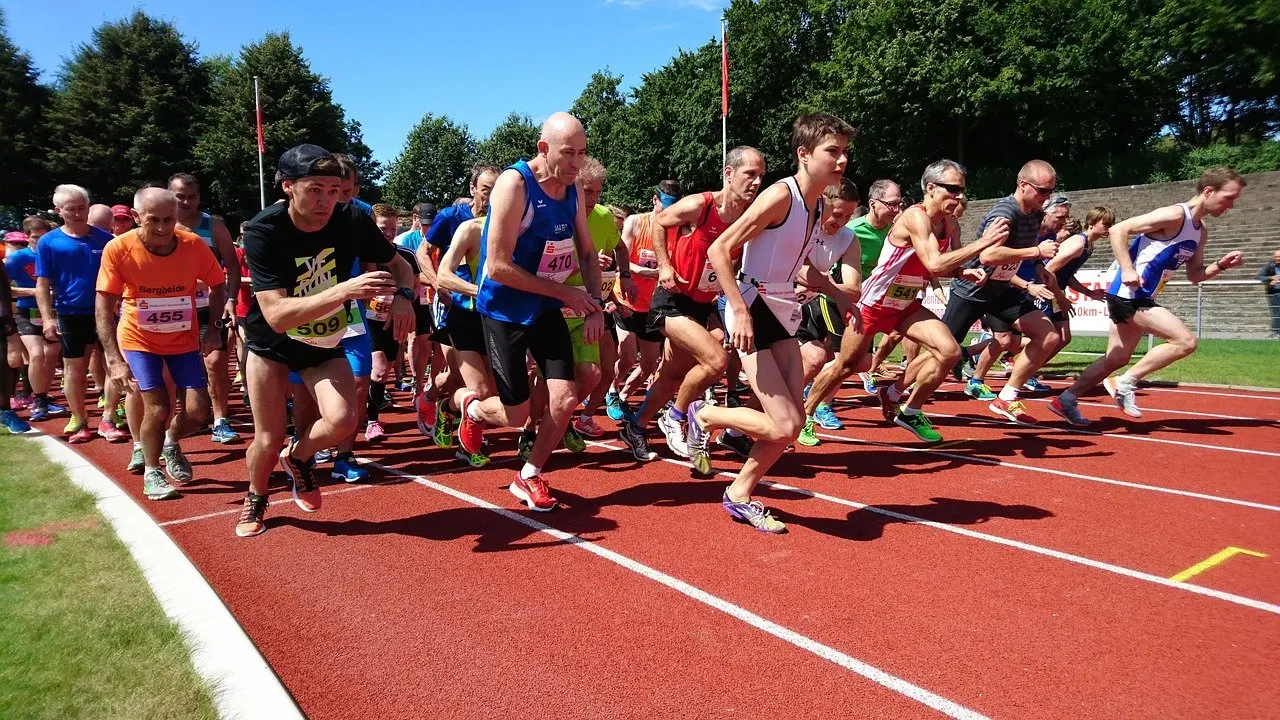
Before the start, the organiser typically gathers runners for a short briefing. This is the moment to confirm how the course is marked, where refreshment points sit and when each cut-off falls. Then the field leaves together.
On the course
Between start and finish, three things shape the experience: the marking, the support points and the cut-offs. Marked tape and signs keep runners on the route. Aid stations, which Runner’s Tribe says big races place at intervals along the route, provide refreshment. Cut-offs at points on the course let organisers pull runners who are running behind, so that volunteers are not left waiting on the trail after dark.
Because terrain varies so much, finish times are hard to predict from distance alone, as Dynafit points out. Plan your day around the cut-offs and the organiser’s published information, not around a time borrowed from a different race.
Finish
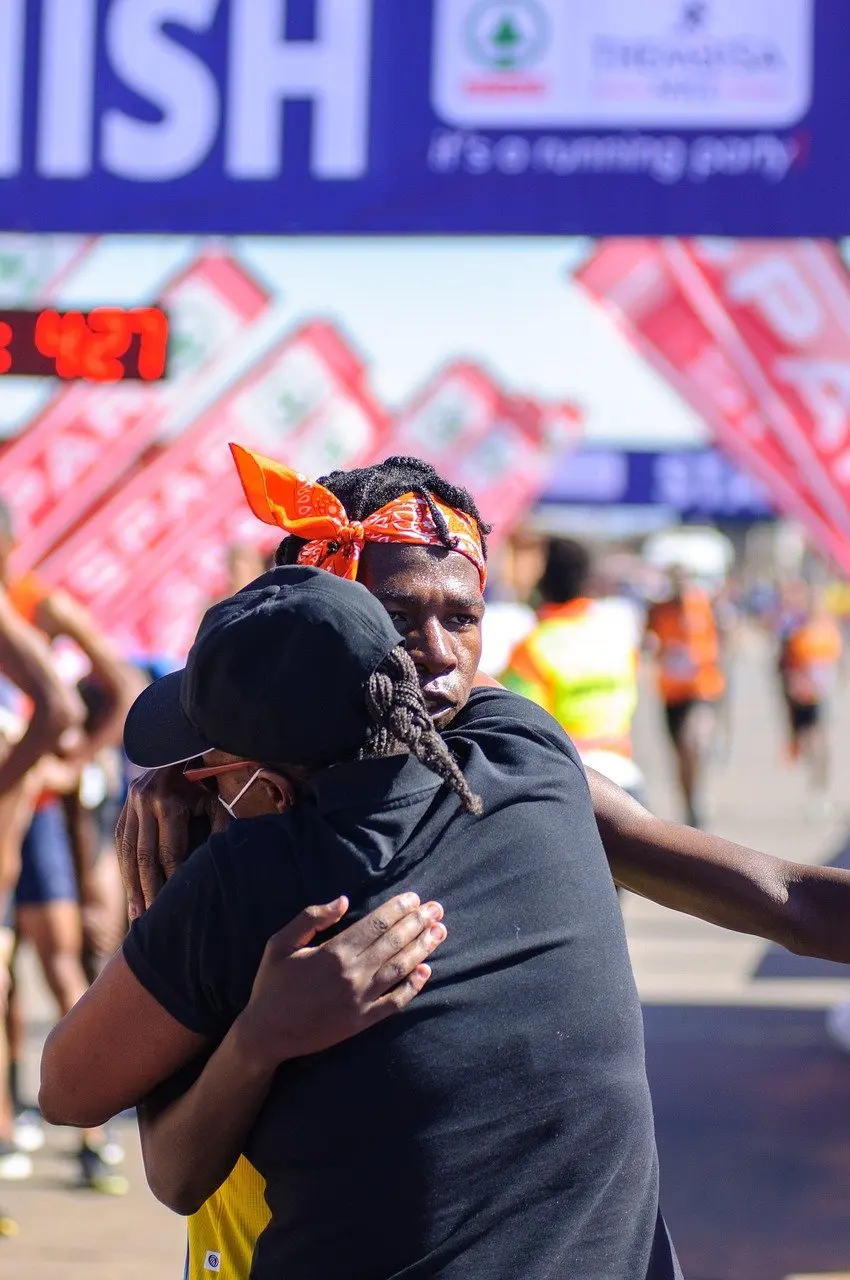
At the finish, volunteers record arrivals and welcome runners in. Small events keep this stage simple, since the same few people who marked the course now staff the line. Anyone who finishes should report to the finish team, so that organisers can confirm that every starter has been accounted for.
Safety and first aid arrangements
Safety on a community trail race rests on a few visible layers. The route is marked, support points are placed along it, cut-offs limit how long anyone stays out, and longer races require runners to carry specified kit. Runner’s Tribe says longer races always publish mandatory kit lists, and that runners who lack the kit are not allowed to take part.
Medical cover varies with the size and distance of the race. The briefing and the race information are the places to learn what the organiser provides, including where help can be reached on the course. Runners should treat the kit list as a safety minimum and be ready to look after themselves between support points.
After the last runner finishes
The day is not over when the last runner arrives. Runlovers says the trails must be cleaned as if nothing had happened, and that this work takes place within a few days of the race. Markers come down, waste is cleared and the paths return to normal use, which protects the goodwill of landowners and residents for next year’s edition.
That clean-up is part of why a small team still needs volunteers after the finish. It also explains why sponsors and entry fees matter: registration revenue alone would never cover all the costs, so the organisers plan for a long tail of work behind a single day of running.
Frequently asked questions
Can a trail race include paved sections?
Yes, within limits. The definition summarised by Trail Running Movement describes trail running as taking place on natural trails with a maximum of 20% paved surface.
How far do trail races go?
Trail races range from a few kilometres to over 900 km, according to the same Trail Running Movement overview. Its 42–69 km band is classed as Trail Ultra Medium (M).
How long does a 30 km trail run take?
Dynafit says an experienced trail runner may need about three hours for 30 kilometres, and up to five hours on technical terrain.