
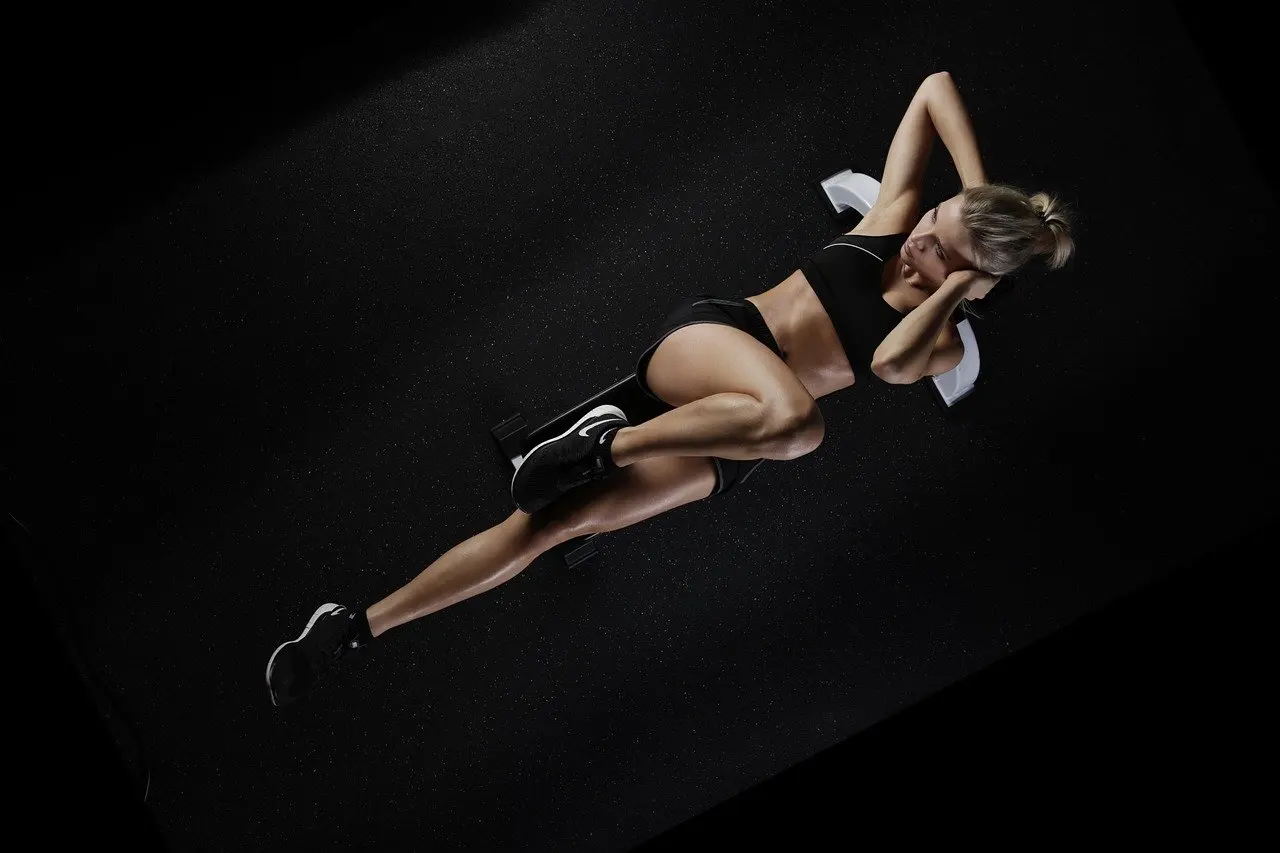
| Reader situation | Exercise | Dose or detail | Planning use |
|---|---|---|---|
| Rough landings feel wobbly sideways | Side plank with band row | 12 reps per side | Top pick for lateral stability. Needs a band with a handle. |
| Twisting or off-camber ground | Pallof press | 12–15 reps per side | Trains the deep core and obliques to resist rotation. |
| Downhills and late miles loosen posture | Forearm plank | Hold 30–60 seconds | Needs no equipment. Fits straight after a run. |
| New to core work | Dead bug and bird dog | Bird dog: opposite arm and leg, then switch sides | Low-load floor moves to learn trunk control first. |
| Need a simple progression | Leg raise | Start with 10 reps, then build gradually | Easy to scale over several weeks. |
The figures above come from a core-strength guide for runners and a resistance band ab workout.
The best core exercises for trail runners resist twisting and sagging rather than chase a six-pack: planks, side planks, dead bugs and band-resisted presses. Choose by the trail problem you notice, then keep the session short.
This page ranks the moves by how directly they train rough, uneven landings. For the wider plan around them, see the trail running training hub.
What trail running asks of the core
Core muscles stabilise the body in every direction and react quickly to counterbalance a twist or a fall, according to a runner-focused core guide. Rocky, uneven ground demands that reaction on almost every stride, which is why trunk control matters more on trails than on a smooth road.
The same guide says a strong core helps absorb the impact forces of running downhill. It also links a weak core to hip drop, which it connects to iliotibial band syndrome, shin splints and lower back issues. It treats the visible six-pack muscles as the least important core muscles for running, so crunch-heavy routines rank lowest here. Isometric holds, where the body stays still against a load, help develop and hold running posture.
That gives the ranking logic: favour exercises that resist sideways collapse and rotation first, then holds that protect posture, then gentle floor drills for learning the pattern.
If rough landings feel unstable
Runners who feel the trunk fold sideways when a foot lands on an angled rock should start with side-based and anti-rotation work. Both exercises below use a resistance band, so they suit anyone who can anchor one or hold a handle.
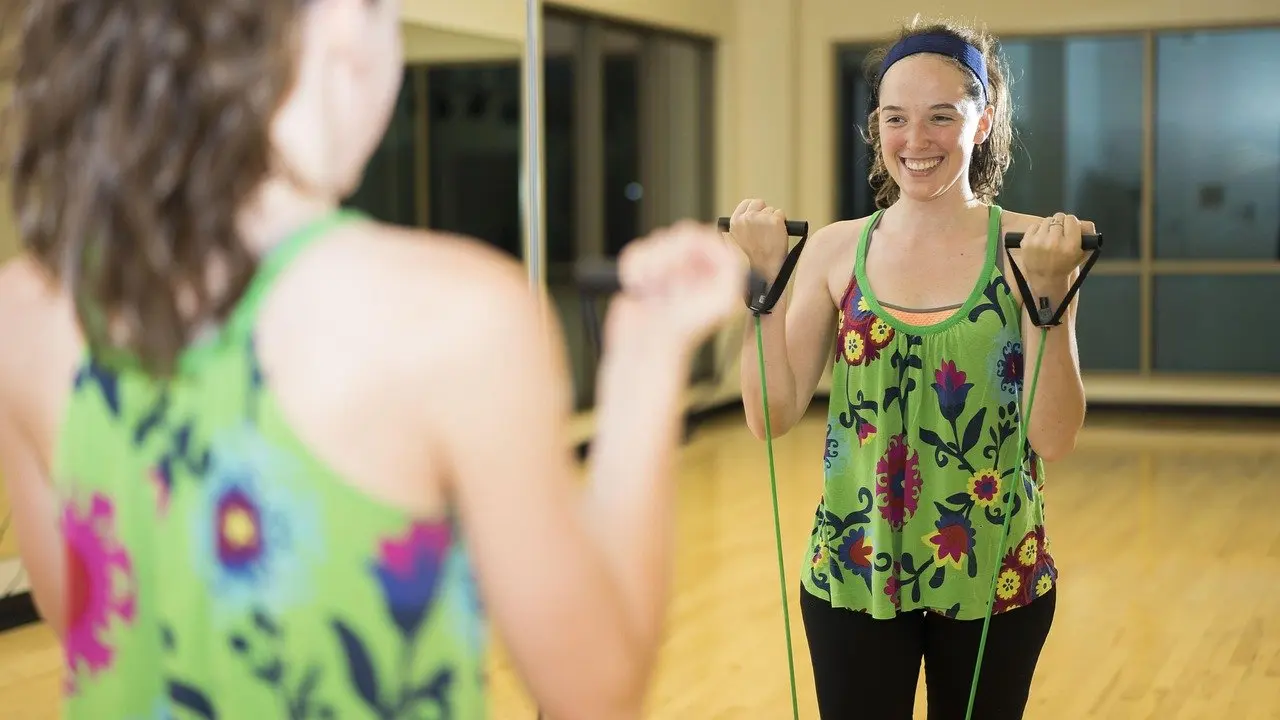
Side plank with band row (top pick)
This move combines a side plank with a pulling action. Get into a side plank and pull the band handle towards you, as the band workout describes it, for 12 reps per side. The side plank holds the hips level while the arm moves, which is the demand a sloping landing places on the body.
It suits runners who already hold a plain side plank comfortably and want more challenge. It is a poor first step for beginners, who gain more from a plain side plank before adding the row.
Pallof press
The Pallof press targets the deep core and obliques, and the same workout programmes it at 12–15 reps per side. The band tries to rotate the trunk and the runner resists, which mirrors the twisting forces the core has to counterbalance on uneven ground.
It suits runners who need rotational control and own a band. Choose a plain plank instead when equipment is unavailable.
Between the two, use this guide:
- Pick the side plank row when the main complaint is the hips dropping or the torso collapsing to one side on landing.
- Pick the Pallof press when the trunk feels twisted by sloping or cambered paths.
- Do both only when time allows, because one of each already covers lateral and rotational control.
If downhills and late miles loosen your posture
When form fades on long descents, isometric holds are the most relevant tool. The runner-focused core guide says this type of work helps develop and hold good running posture, and that a strong core helps absorb downhill impact.
Forearm plank
The plank is the simplest hold to place after a run. The band workout prescribes a forearm plank held for 30–60 seconds, and a banded plank hold in its sample routine uses the same range. Keep the body in one line from head to heels. Stop the set when the hips sag, because a sagging plank trains the posture fault you are trying to avoid.
It suits almost everyone and needs no equipment. Its limit is that it trains the front of the trunk more than rotation, so it works best paired with a side plank or Pallof press from the section above.
If you are new to core work
Beginners and returning runners gain more from learning trunk control on the floor than from loaded band work. The runner-focused core guide lists leg raises, bird dogs, supermans, bicycle crunches and dead bugs among useful core exercises for runners.
Dead bug
The dead bug is a floor exercise that keeps the trunk steady while the limbs move, which makes it a basic anti-extension drill. It suits runners who cannot yet hold a plank without the lower back arching. It does not load the trunk heavily, so progress to planks and band work when it feels easy.
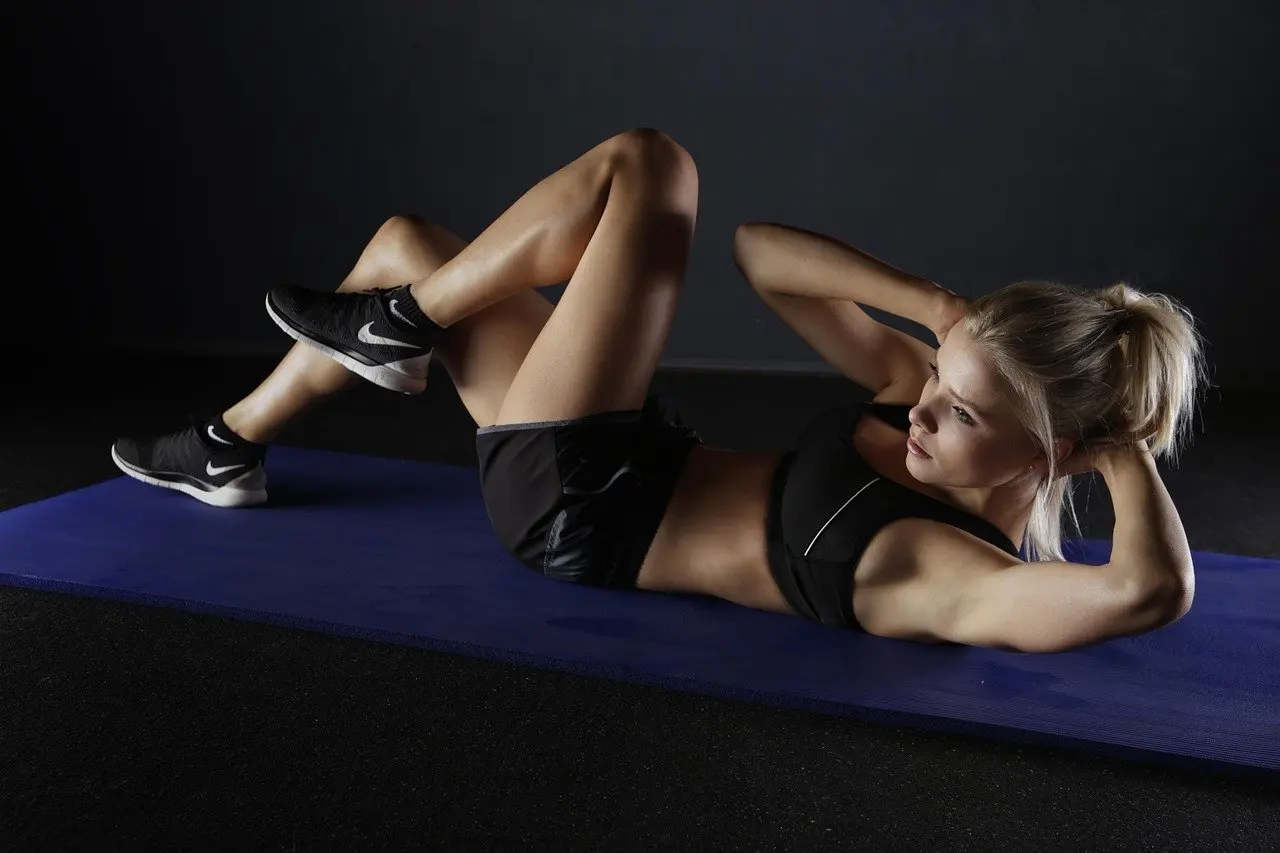
Bird dog
From a tabletop position, extend the opposite arm and leg together, then switch sides. This trains the trunk to stay level while a limb leaves the ground, which is useful preparation for single-leg landings. It suits runners who find lying-down drills dull and want a more upright pattern.
Leg raise
The runner core guide suggests starting with 10 reps and increasing gradually. It is the easiest of the three to scale, though it works the lower abdomen with less emphasis on side-to-side control. Treat it as a progression tool rather than a trail-specific move.
A short core session around a run
A compact session works best after an easy run, when the legs are warm and the work does not compete with a hard effort. Build it from one side-based move, one anti-rotation move and one hold. The band workout’s sample routine uses 2–3 sets of 12–15 reps or 30–60 second holds, which gives a workable ceiling rather than a target for beginners.
- Lateral move: side plank, progressing to the band row at 12 reps per side.
- Rotation move: Pallof press at 12–15 reps per side, or a bird dog if no band is available.
- Posture hold: forearm plank for 30–60 seconds.
Weekly frequency depends on how much strength work the plan already holds. Runners who already lift can let strength training for trail runners carry the heavier work and keep this session brief. Runners whose only strength work is core can repeat it on days they already run, because consistency matters more than session length. Those building towards steep races can pair it with how to train for elevation gain running.
Balance work on uneven ground
Core strength is one half of stable landings; the ankle is the other. Single-leg stands on a pad, a log or other uneven surface are a common companion to the exercises above, and they ask the foot and trunk to work together. Treat them as an optional extra and keep the surface low and safe.

A runner with repeated ankle sprains or a swollen, painful joint should see a physiotherapist before adding balance drills to a plan.

Frequently asked questions
| Question | Answer |
|---|---|
| Do crunches help trail runners? | They rank lowest. The runner core guide calls the six-pack muscles the least important core muscles for running, so side planks, planks and presses give more return. |
| Is a resistance band necessary? | No. Planks, side planks, dead bugs and bird dogs need no equipment. A band adds the Pallof press and the side plank row. |
| Why does a weak core matter for knees and shins? | A weak core can lead to hip drop, which may contribute to iliotibial band (ITB) syndrome, shin splints and lower back issues. |
| Where should a beginner start? | With a leg raise at 10 reps, as suggested for runners, then add reps gradually before moving to banded work. |