
| Listing | Date and town | What the calendar shows | Planning use |
|---|---|---|---|
| Topo Trail Marathon Races | 6 Dec 2026, Bethel, OH | A trail race with its date and town | Shows what a trail-specific entry looks like. Open the race page for course details before committing. |
| Holiday Lights Fun Run, Miami County Park District | 1 Dec 2026, Troy, OH | A park district named as the organiser | Public land managers can host events themselves. Look for the organiser’s name when judging an event. |
| 17th annual Harmony for Ohio Foundation Turkey Trot 5k | 26 Nov 2026, Minster, OH | An edition label on a recurring event | An edition number points to a community event with a history. Treat it as a sign of continuity. |
| Thanksgiving “Run to Remember” 5k Run/Walk | 26 Nov 2026, Logan, OH | A run/walk format | Suits walkers and mixed groups. Confirm the walking rules on the race page. |
| Coldwater Knights of Columbus 5k Run/Walk for Vocations | 14 Nov 2026, Celina, OH | Date, name and town in one line | Useful for comparing a local event against your own free weekends. |
| Bruin Blitz 5K | 17 Jul 2027, Hartford City, IN | Registration closed | Check the status label before planning travel or training around a date. |
The entries come from a single event calendar, the Can’t Stop Running Co. race calendar, and show how community listings present dates, towns, organisers and registration status.
Outdoor running events range from a local trail race to a run/walk or a marked walking route. Choose by format and organiser first, then check the date, the town and whether registration is still open.
This page works as a map of the subject. It covers finding events, choosing between a race and a hike, and how small associations and volunteers put events together. Readers who want the mechanics can follow the guide that answers how do community trail running events work, then move to the specific task pages linked below.
Finding outdoor running events near you
A race calendar is the quickest way to find outdoor running events near you, because each line packs the date, the event name and the town into one place. The entries above show the pattern: a day of the week, a full date, a title, a “Race Info” link and a town. Those four pieces are enough to decide whether an event is worth a closer look.
Reading a calendar listing
Start with the town and date, since they decide whether the event is realistic for you. Then read the title for clues about format.
Do not assume every outdoor event on a calendar is a trail race. Several of the listings above are short community runs. They are outdoor running events, but only some of them are trail races. The race page behind each “Race Info” link is where the course type, start time and rules belong, so read it before you travel.
Checking registration status
Calendars can show whether entries are still open. That label describes the entry window, nothing more. It does not tell you whether the event is running, so treat it as a cue to look for a waiting list or a next edition rather than as a cancellation.
Check the status early in your planning. A date that looks perfect is no use if entries are closed, and a date far ahead may not yet be open. If you intend to enter, the step-by-step guide on how to register for a trail race covers what the entry process usually involves.
Using search and filters
Some running-store race pages go further than a plain list. The Fleet Feet race listings page offers keyword search and a set of filters, so a visitor can narrow results rather than scroll through everything. Use a keyword such as “trail” or “walk” to cut a long calendar down to the formats you care about.
- Search by format word. Words such as trail, run/walk or fun run separate competitive races from relaxed community outings.
- Filter by location. A tight area keeps travel short and lets you compare several dates in one region.
Once you have a shortlist, the next question is what kind of event each entry really is, which depends on whether it is a race or a hike.
Trail race or trail hike event
A trail race is a timed competition on a marked off-road course, while a hiking event is a non-competitive outing on a marked route. The two share terrain and volunteers, but they ask different things of participants. The listing format is the most reliable clue to which one you are looking at.
What changes between the two formats
- Purpose. A race ranks finishers, so it needs bibs, a start line and results. A hiking event gives participants a route to complete at their own pace.
- Pace and pressure. Racing sets a clock against everyone entered. Walking events invite groups, families and anyone who wants time outdoors without a finishing position.
- Rules. Races tend to carry stricter requirements on conduct and equipment. The pages on trail race rules and the trail race mandatory gear list explain what that means in practice.
- Organiser workload. Timing and results add work that a simple marked walk does not need, as the guide on how is a trail race timed describes.
The run/walk middle ground
Between the two sits the run/walk. The Thanksgiving “Run to Remember” listing in Logan, OH, on 26 Nov 2026 is labelled 5k Run/Walk, and the Celina listing on 14 Nov 2026 uses the same label. That wording signals that walkers belong in the field. For a newcomer, it lowers the barrier: you can enter without committing to run the whole distance.
Confirm on the race page whether walkers are timed, whether they start with runners and whether there is any cut-off. Do not read the label as a guarantee of any of those things.
Which format suits whom
A trail race suits someone who wants a clock, a field to run against and a clear result. A hiking event suits someone who wants the scenery and the company more than the placing. A run/walk suits mixed groups, such as a runner and a friend who prefers to walk. If you are unsure, pick the gentler format first. You can always move to a timed race once you know how an event day feels.
How local trail running events are organised
Local trail running events are organised by a mix of landholders, associations and volunteers, each covering a different part of the job. The calendar hints at this mix. One listing names a park district as organiser, another carries an edition label that shows the community has repeated the event, and others are tied to a local cause or town. Behind every one sits a group of people who agreed on a date, a route and a division of labour.

Who stands behind an event
The Holiday Lights Fun Run on 1 Dec 2026 is listed under the Miami County Park District in Troy, OH. That shows a public body can be the named organiser of a run. Many community events instead come from a running club or a local association, with the landholder acting as a partner. The guide on how do running associations organise trail races looks at that association side in more detail.

The 17th annual Turkey Trot 5k in Minster, OH, on 26 Nov 2026 shows a different strength. An event that reaches a numbered edition has a team that has solved the basics before and can repeat them. If you are choosing between two similar events, a long-running one is usually the safer bet for a smooth day because its organisers have practised it.
The volunteer team
Small events depend on volunteers more than on paid staff. Typical jobs include marking the course, staffing registration, running aid stations, marshalling junctions and handling first aid. A volunteer does not need to be a runner to be useful. People who like logistics, cooking or simply standing at a crossing with a flag are as valuable as strong runners.
For anyone wanting to help, how to volunteer at a trail race explains the usual roles and how to put your name forward. Volunteering once is also the fastest way to understand how events work before you enter or organise one.

Course marking and route planning
The route is the heart of a trail event, and marking it clearly is one of the most important jobs. Participants must be able to follow the course without guessing, particularly where paths cross or split. Good marking is a safety measure as much as a courtesy. The page on how to mark a trail race course goes through the practical choices.
Organisers who plan a route should also think about who owns or manages the land, because access is a decision for the landholder. The guide to permits needed for a trail running race sets out how that conversation usually starts.
Registration and race numbers
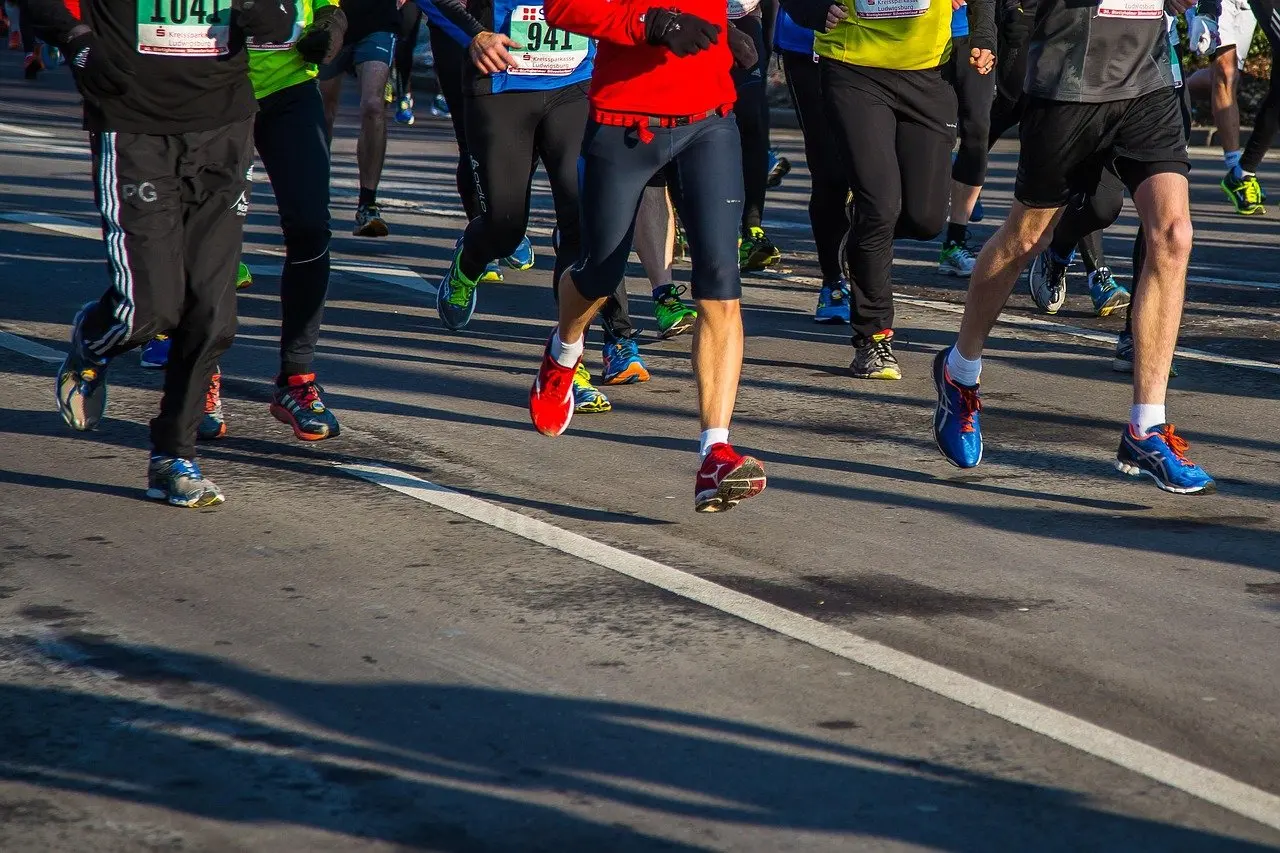
Registration turns a list of names into a field with numbers. A desk where bibs are handed out is the visible face of that work, but it depends on an entry list prepared in advance and a clear rule for what happens to late entries. A calendar status such as “Registration Closed” is the public result of that planning. Organisers close entries so they can match supplies, volunteers and safety cover to the number of people on the course.
Safety, insurance and timing
Three behind-the-scenes tasks decide whether an event is responsible as well as enjoyable. The first is a safety and medical plan, which sets out who responds to an injury and how help reaches the course. A written trail race safety plan makes that response reliable rather than improvised.
The second is insurance, which protects the organising group and its volunteers if something goes wrong. The guide to insurance for a trail running event describes what organisers should ask about. The third is timing and results, where even a small event needs a method to record finishers fairly. Which of these a given event needs depends on its size and format, and a casual walk will need less than a timed race.

Choosing a format that fits the day
Outdoor running events come in several formats, and the format shapes how much preparation both participants and organisers need. Before choosing, think about the setting, the time of day and the kind of company you want.
Competitive races and obstacle formats
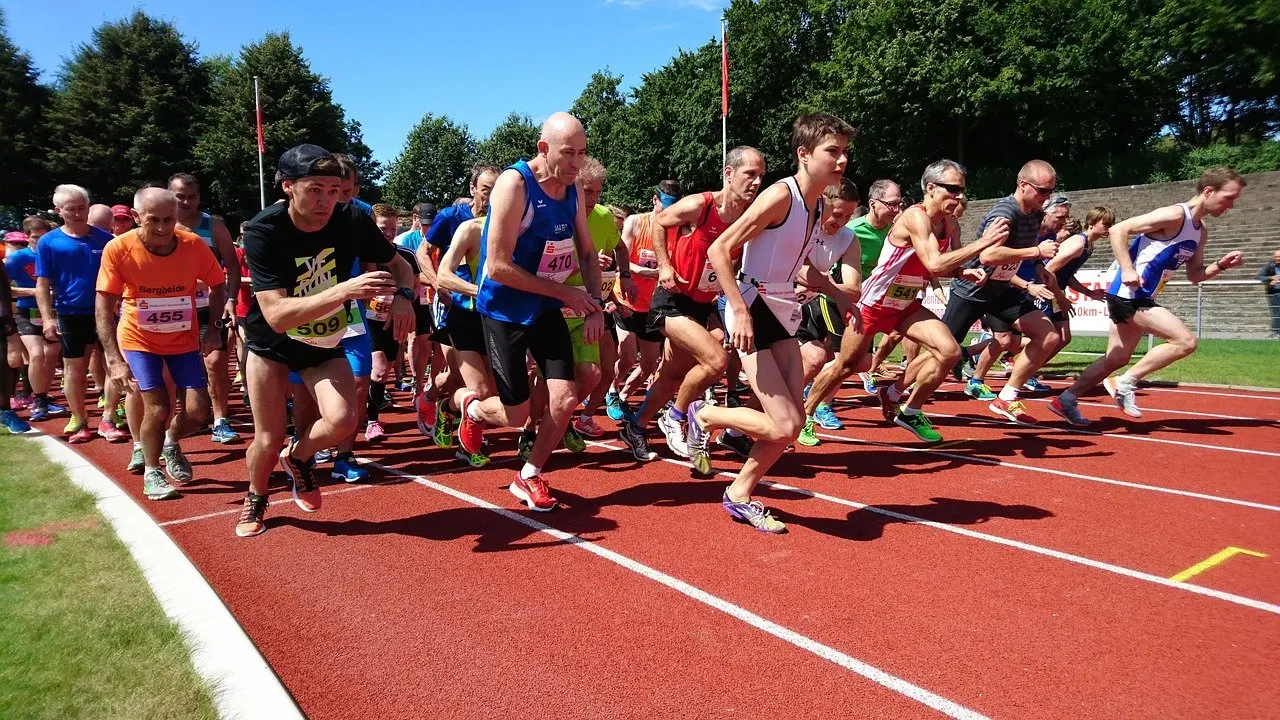
Competitive races can include features that add difficulty or spectacle, such as obstacles or water crossings. The image below comes from a large stadium steeplechase and is shown only to illustrate how a format can differ from a plain run. A small community event is a very different scale. If you enjoy variety, look at the event description for any features that go beyond a simple course.
Night runs
A night trail run changes the experience entirely. The route may be the same, but darkness changes how participants read the ground and how organisers mark and staff it. Lighting becomes a core piece of equipment, and marking has to be visible after dark. Anyone choosing a night event should read its gear requirements closely and rehearse the route in similar conditions if the organisers allow it. The reconnaissance runs offered by some groups exist for that purpose.
Seasonal and themed community runs
Many calendar entries are tied to a season or a theme. The Holiday Lights Fun Run in Troy, OH, and the Turkey Trot listings in Minster, OH, and Miamisburg, OH, show how a holiday gives a community event a reason to exist. These themed runs are usually friendly and welcoming. They are often a good first outing because the emphasis is on taking part, and a fun-run label signals a relaxed tone.
Preparing as a participant
A first-time participant should prepare for logistics and rules as well as fitness. Most of the stress on race day comes from small things, such as not knowing where to collect a number or what must be carried on the course.
Getting ready for the first start
Work through a checklist in the days before. The first trail race checklist pulls the essential steps into a single list, from confirming your entry to planning how you will reach the start. Use it alongside the race page, since each event sets its own start arrangements.
Kit and rules
Trail events can ask participants to carry specific items. Read the event’s own requirements rather than relying on what another race demanded. The explanation of mandatory gear helps you understand why such lists exist, and the rules guide covers behaviour on the course, including how to treat other participants and the land. Sticking to the published rules protects your place in the field and helps the event keep good relations with the landholder.
Choosing your first event
- Pick a familiar format. A run/walk or a fun run lets you learn how an event day works without added pressure.
- Prefer an established event. A numbered edition suggests the organisers have a tested routine.
- Keep travel simple. A town close to home removes one source of stress on the day.
- Move to trail-specific races later. A listing such as the Topo Trail Marathon Races is a good target once you know how entries, bibs and marking work.
Taking the organiser’s seat
Anyone who has volunteered a few times may start to wonder what it would take to run an event. A small association can organise a community race without a large budget, but it does need a clear plan and a willingness to share the work.
Starting small
The guide on how to organize a trail race walks through the sequence of decisions, from agreeing the idea with a landholder to choosing a date. Keep the first event modest. A small field, a short course and a handful of dependable volunteers is a safer start than an ambitious route.
Using a checklist
An organiser’s checklist keeps the many small jobs from being forgotten. The trail race organizer checklist groups the tasks so that nothing, such as first aid cover or marking supplies, is left to the last minute. Assign each item to a named person, and review the list together a little before the event.
Running an aid station
Aid stations are where participants meet volunteers most directly. They need supplies, a sensible location and people who can respond to a tired or struggling runner. The guide on how to run a trail race aid station explains how to set one up. A friendly, well-organised station is often what participants remember most about an event.
Looking after the community
Community events work because people want to come back. A welcoming finish area, a shared meal and thanks to volunteers keep the group together from year to year. Recurring events such as the Turkey Trot editions listed above depend on that goodwill as much as on the route.
Where to start
The best starting point depends on what you want from outdoor running events. Match your goal to the right next step.
- You want to find an event. Use a race calendar or a store listing with filters, then open the race page for details. Check the registration label before making plans.
- You want to take part for the first time. Choose a run/walk or a fun run, then use the first race checklist to prepare.
- You want to help. Volunteer at a local event and learn one role well, such as an aid station or course marking.
- You want to organise. Begin with a small field and a simple route, and involve an existing club or association if one is nearby.
Whichever route you take, the event calendar is only the front door. The real substance lies in the people and planning behind each listing, and learning that side makes you a better participant as well as a better volunteer.
Frequently asked questions
Does “Registration Closed” mean an event is cancelled?
No. On the calendar, the label for the Bruin Blitz 5K simply reports that entries are closed. Look at the race page for any further notice about the event itself.
Can walkers enter a run/walk event?
The run/walk wording in listings such as Logan, OH, and Celina, OH, signals that walking is part of the format. Check the race page for pacing, start and cut-off rules.
Who can organise an outdoor running event?
Organisers vary. The calendar shows a park district hosting a fun run, and other events are run by community groups and associations, each relying on volunteers.
Do I need to be a runner to volunteer?
No. Roles such as registration, marshalling, aid stations and course marking suit people who want to help without racing.
How do I know whether a listing is a trail race?
Read the event name and the race page. A title such as Topo Trail Marathon Races points to a trail event, while a 5k run/walk may be a general community run.